9 October 2026 · 4 min read
Leadership Follow-Up Tracker: Keep Decisions, Owners, and Deadlines Visible
Learn how a leadership follow-up tracker helps CEOs and Chiefs of Staff keep commitments from getting lost after meetings.
Overview
Leadership teams make a lot of promises. Someone will send a deck. Someone will check with legal. Someone will confirm budget. Someone will follow up with a strategic customer. Someone will update the board note.
If those commitments are not tracked clearly, they disappear. A leadership follow-up tracker keeps the work visible after the meeting ends.
Why follow-ups get lost
Follow-ups usually go missing because they are scattered across meeting notes, chat messages, inbox threads, calendar reminders, personal to-do lists, and shared documents.
That makes it hard to know who owns what or whether anything is still blocked.
What the tracker should include
A useful follow-up tracker should answer:
• What needs to happen?
• Who owns it?
• When is it due?
• What meeting or decision created it?
• What is blocking it?
• Is it complete?
That is enough to keep leadership commitments from slipping.
Best practices
• Write one owner per action.
• Use specific language.
• Give each task a due date.
• Link the follow-up to the deal, company, or decision.
• Review overdue follow-ups every week.
• Close the loop once the action is complete.
The tracker should be simple enough that people will actually update it.
Example
Instead of “follow up with customer,” use: “Send revised proposal to Acme after finance approves the pricing change by Friday.”
The second version is much easier to act on.
How it supports leadership work
A leadership follow-up tracker is useful when the company is growing and more work depends on executive involvement: large opportunities, customer escalations, partner conversations, hiring decisions, budget approvals, and cross-functional initiatives.
When the company gets busier, the cost of missed follow-up rises quickly.
Why RevenueRobotics fits
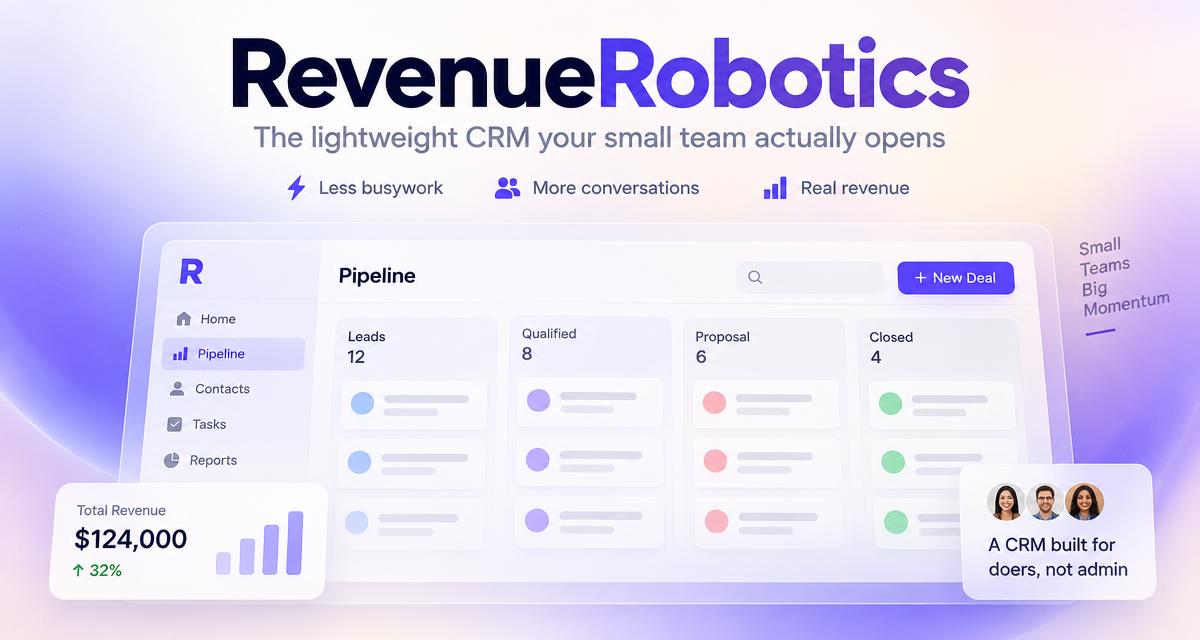
RevenueRobotics is a strong fit because it keeps follow-ups connected to deals, companies, and tasks in one workspace. That makes it easier for leadership teams to see what was promised, what still needs to happen, and what is at risk if nobody follows through.
Related product page
AI sales follow-up CRM →Try RevenueRobotics
Companies, deals, automations and AI note summaries in one calm CRM.
Start free trial