27 September 2026 · 3 min read
A simple sales pipeline for founder-led teams
Build sales pipeline stages that reflect buyer progress, then give every opportunity an owner and a clear next action.
Why this matters
Your pipeline should make it easier to sell. If a stage does not change how you work a deal, it probably does not need to exist.
Start with a small number of stages that describe meaningful progress.
Example stages
Lead: A potential buyer is identified, but you have not confirmed a fit.
Qualified: You understand the need and have a reason to continue.
Proposal: You have shared a concrete offer or scope.
Negotiation: The buyer is reviewing terms or resolving final questions.
Won or lost: The opportunity has a recorded outcome.
These are example stages, not a universal template. Change them to match how your buyers actually make decisions.
Define the exit from each stage
Do not move a deal to “proposal” merely because you intend to write one. Move it when the proposal has been sent. A clear definition makes your pipeline more consistent—and your reports easier to interpret.
Add a next action to every open deal
A stage tells you where a deal stands. The next action tells you what to do. Record an owner, an action, and a date. If you cannot identify the next action, you may need to qualify the opportunity again.
Review the pipeline every week
Look for stale deals, missing close dates, and proposals without a response plan. Then choose the actions that will move the strongest opportunities forward.
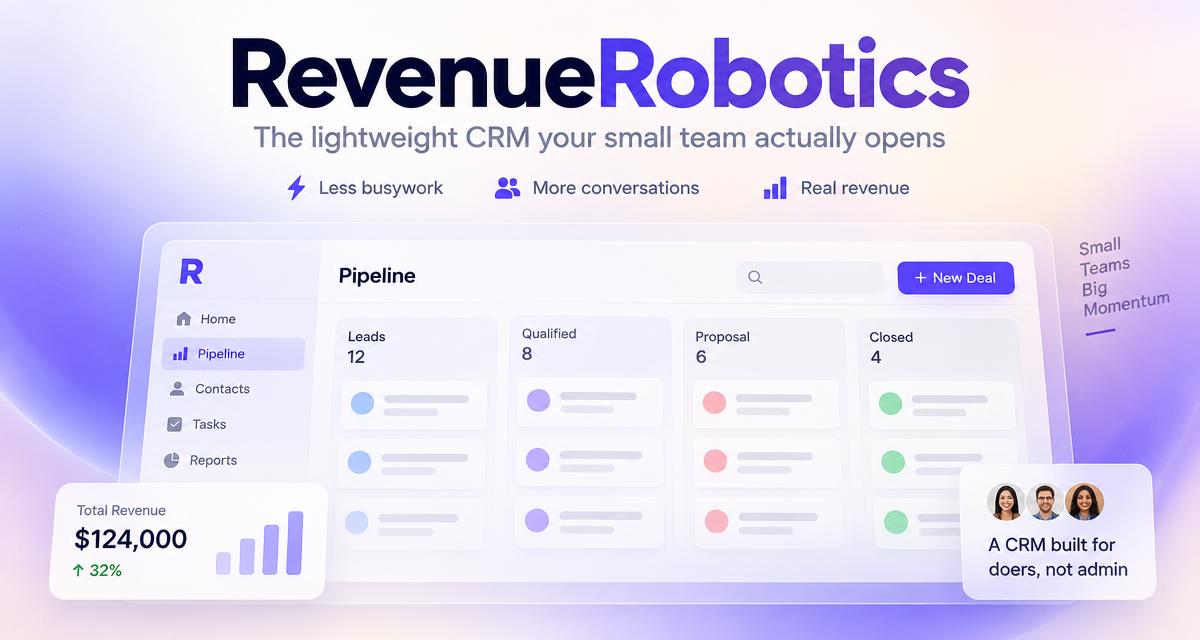
RevenueRobotics combines deals, tasks, at-risk alerts, and a daily focus view to help you make that review actionable.
CTA: Explore the CRM for founder-led sales.
Try RevenueRobotics
Companies, deals, automations and AI note summaries in one calm CRM.
Start free trial