1 October 2026 · 3 min read
A founder’s checklist for choosing a first sales CRM
Choose a first CRM by testing your real pipeline, next actions, import process, reporting needs, and cost per seat.
Why this matters
Your first CRM does not have to run every part of your business. It needs to help your team follow through on the sales work you already have.
Use a real sample of your pipeline when evaluating products.
Can you find the next action?
Create a few deals at different stages. See whether you can quickly identify what needs to happen today, what is overdue, and what has stalled.
Can you understand a deal without asking someone else?
Open a record and check whether the buyer, company, relevant context, owner, and next step are easy to find.
Can you move your data in?
Test a CSV containing ordinary records and a few imperfect ones. Review field matches, duplicates, and import results before trusting the process.
Can you explain the forecast?
Check what the product means by open pipeline and weighted forecast. Make sure your team understands the difference between an estimate and committed revenue.
Will you use it next month?
Consider setup effort, everyday usability, and the cost for the number of seats you need. The right CRM is one your team will keep current while doing actual sales work.
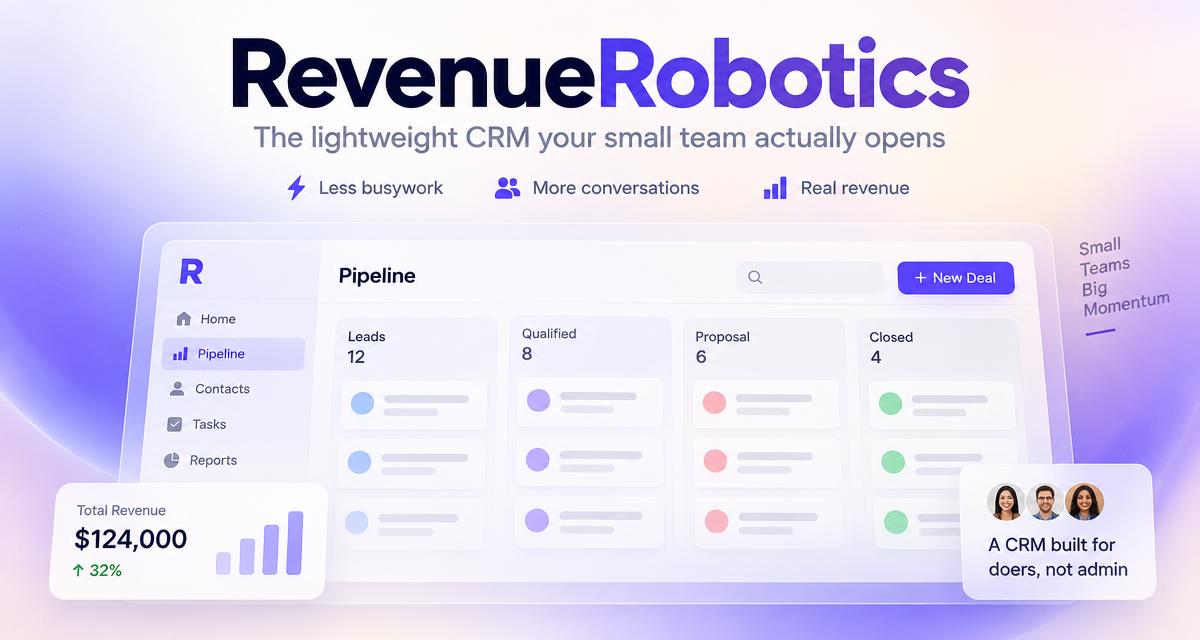
RevenueRobotics is designed around that daily workflow: prioritize deals, review risk, draft follow-ups, and see the pipeline in one €29-per-seat monthly plan.
CTA: Explore RevenueRobotics for startups.
That brings the series to 32 blog drafts. I would not publish them all at once: several address adjacent questions, so add a distinct screenshot, worked example, or product walkthrough to each before it goes live.
Try RevenueRobotics
Companies, deals, automations and AI note summaries in one calm CRM.
Start free trial