1 October 2026 · 3 min read
CRM vs spreadsheet: which does your sales process need?
Compare a sales spreadsheet with a CRM for tracking deals, follow-ups, shared ownership, and forecasts.
Why this matters
A spreadsheet can be an excellent first pipeline. You can create it quickly, change the columns whenever you like, and see every deal at once.
The question is not whether spreadsheets are bad. It is whether yours still helps you decide what to do next.
Where a spreadsheet works well
A spreadsheet may be enough when one person owns sales, the number of active opportunities is manageable, and every deal has a clearly recorded next step.
If you can open it and immediately identify who needs a follow-up, which proposals are outstanding, and what might close this month, there may be no urgent reason to switch.
Where a CRM becomes useful
As your pipeline grows, a row may no longer hold enough context. You need to connect a company, a person, a deal, its history, and the next task. When several people work on sales, you also need everyone to see the same current record.
A CRM becomes particularly useful when you spend more time maintaining the spreadsheet than acting on the opportunities in it.
A simple test
Open your pipeline and try to answer these questions without checking email or another document:
Which three deals need attention today?
What happened in your last conversation with each buyer?
Who owns the next action, and when is it due?
Which deals are included in this month’s forecast?
If those answers are hard to find, it may be time for a different system.
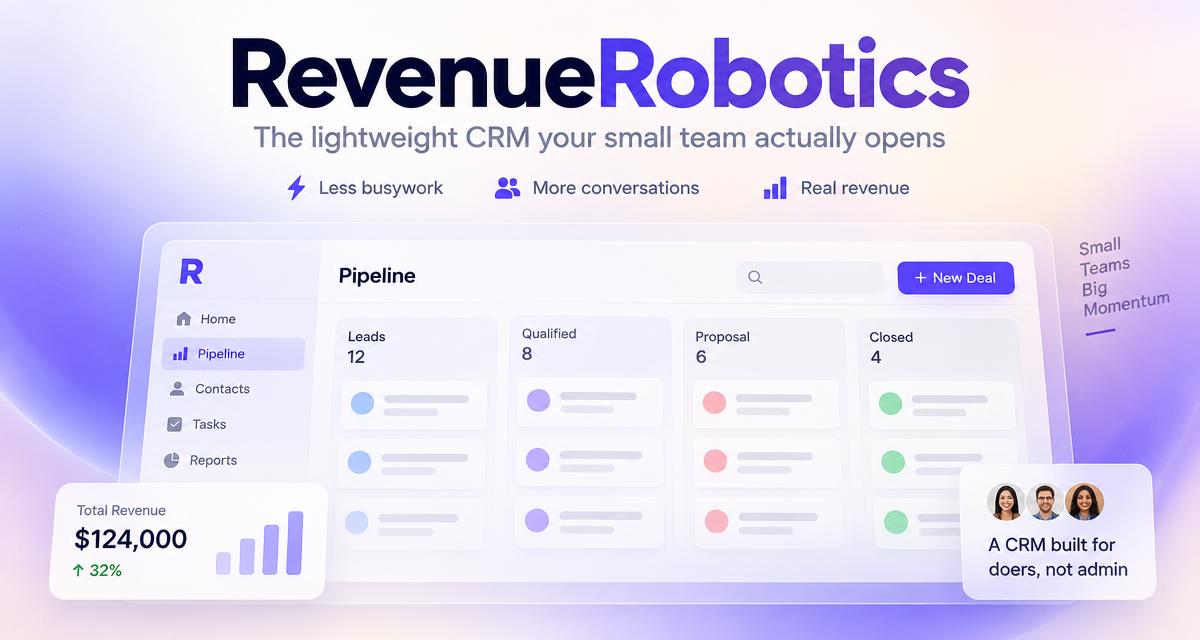
RevenueRobotics combines deals, tasks, follow-up assistance, and forecasting in one workspace. You can bring existing records in through a reviewed CSV import rather than starting from zero.
CTA: See how to move your spreadsheet into a CRM.
Try RevenueRobotics
Companies, deals, automations and AI note summaries in one calm CRM.
Start free trial